By OP SVP Jeremy Gruber, originally published in AMNY
Zohran Mamdani has challenged New Yorkers to question systems that concentrate power in the hands of the few. Whether the issue was housing, transportation or economic inequality, his message has been consistent: just because a system is longstanding doesn’t make it just.
That’s why his defense of New York City’s closed primary system was so surprising.
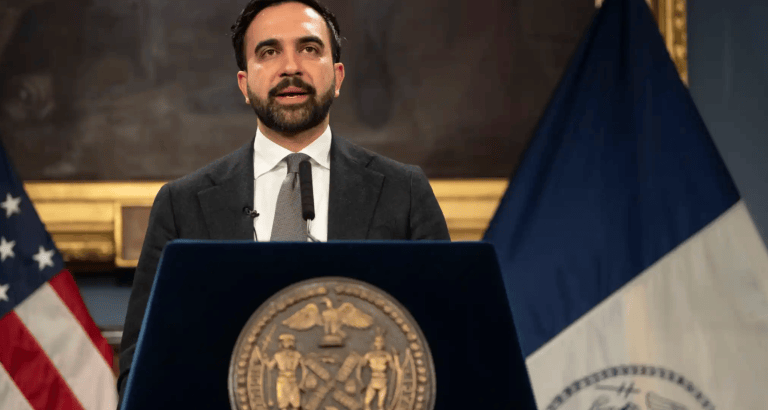
Asked about opening the city’s primaries to the 1.2 million independent voters currently barred from participating, Mayor Mamdani said he was “quite content” with the existing system. It has “been in effect for quite some time,” he said, and it “doesn’t preclude greater participation.” He pointed to the more than one million votes he received in last year’s election as proof the system works.
The mayor won a significant election. The system that produced it remains deeply undemocratic.
Every four years, New Yorkers are told that the future of the city is on the ballot. Yet more than one million city residents are prohibited from voting in the elections that almost always determine who will govern. They pay for those elections. They follow them. They live with the results. But unless they join a political party, they cannot participate.
Who are these excluded New Yorkers?
They are the fastest-growing segment of the electorate. Fifty-seven percent of Generation Z voters identify as independents, as do a majority of millennials. Fifty-four percent of New York City’s independent voters are people of color. They are hardly a political fringe. They are the city itself.
A movement that claims to represent the future cannot defend a voting system that locks out the future’s voters.
Nor is this an abstract debate. Over the past several weeks, hundreds of independent New Yorkers have appeared before the Charter Revision Commission. They have come from every borough, every race, every neighborhood and every walk of life. Their testimony has been remarkably consistent.
Veterans who served their country but cannot vote in taxpayer-funded primaries. Young voters who reject party labels but want a voice in choosing their leaders. Lifelong New Yorkers who have lived much of their adult lives without participating in a meaningful election. New citizens from across the globe.
These are not partisan operatives demanding an advantage. They are citizens asking for the same voice their neighbors already have.
A politics rooted in inclusion should not dismiss those stories. It should begin with them.
Mayor Mamdani has argued, rightly, that many of our institutions have evolved to preserve power rather than share it. Closed primaries fit that description perfectly. Primaries were created to give voters—not party insiders—a greater voice in choosing their leaders. But over time, the major parties have harnessed them to exclude millions of voters.
Today, primary elections are financed by the public, administered by the government, and disproportionately benefit political organizations whose greatest challenge is often winning low-turnout primaries rather than persuading the broader electorate.
Across the country, cities and states are moving away from this model. Washington, D.C., a city with a political landscape remarkably similar to New York’s, just recently adopted open primaries. New York has not.
This isn’t a question of ideology. It’s a question of democracy.
Progressivism has never been about preserving exclusionary institutions because they are familiar. It has been about expanding participation, challenging entrenched power and ensuring that democracy reflects the people who live under it.
If Mayor Mamdani believes those principles, then independent voters deserve more than reassurance that the status quo is working. They deserve an explanation for why one of the nation’s most exclusionary election systems should remain untouched.
That’s why Open Primaries is formally asking Mayor Mamdani to meet with us at an Independent Voter Town Hall, in person, as soon as his schedule allows. 1.2 million independent New Yorkers deserve a genuine discussion on why our great city can’t do better.
The mayor has asked New Yorkers to imagine a different kind of politics. More than one million of us are still waiting to be invited into it.
Jeremy Gruber, JD is the Senior Vice President of Open Primaries and an independent voter in Park Slope, Brooklyn.